
SpaceX continues to set spaceflight records.
Elon MuskIt launches more frequently than any other company, and it also operates the largest satellite constellation ever assembled – the Satellite Constellation. Starlink The broadband network, which consists of approximately 11,000 satellites (and counting).
Saturday evening (August 15) SpaceX He set another mark, for the shortest duration between orbital flights: he launched two flights Falcon 9 The Rockets are just 38 minutes behind, beating their old mark — It is set for August 31, 2024 With two Starlink missions – 27 minutes apart.
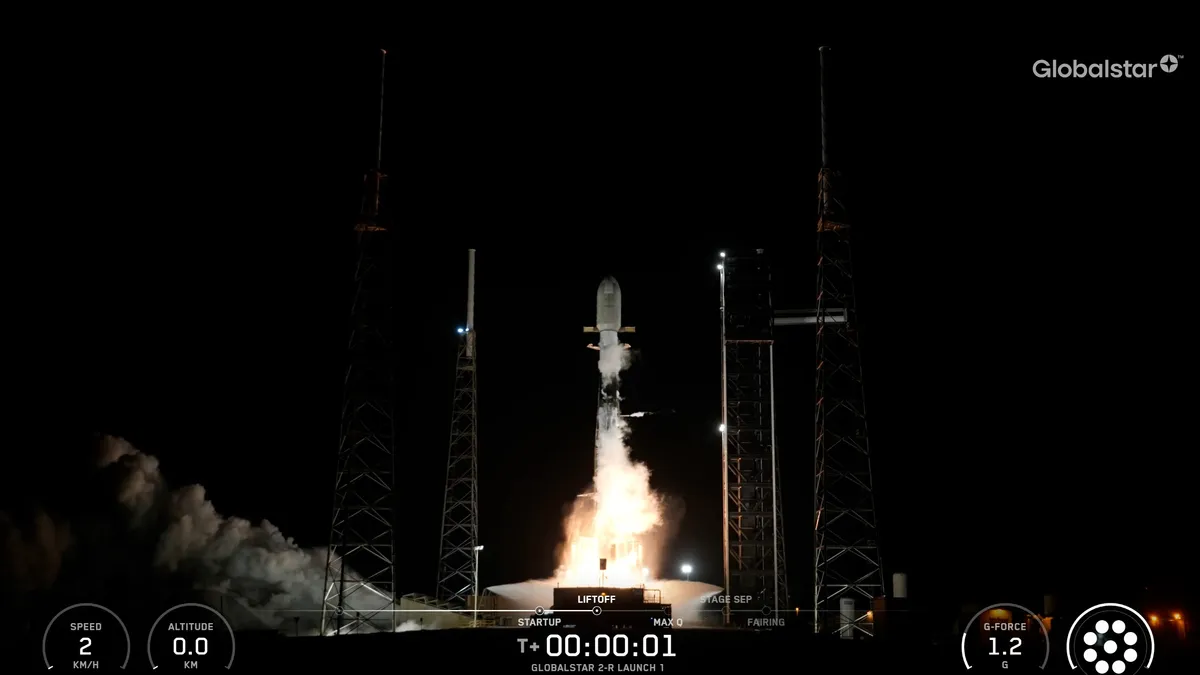
First take off from Florida Cape Canaveral Space Force StationIt occurred on Saturday at 9:12 PM EDT (0112 GMT August 16) and carried eight satellites to Low Earth orbit (LEO) for Louisiana-based communications company Globalstar.
All eight spacecraft were successfully deployed, spaced six minutes apart starting 56.5 minutes after liftoff. SpaceX announced via social media.
As the Falcon 9 rocket made its way into low Earth orbit, another rocket lifted off from it Vandenberg Space Force Baseon the central coast of California. This launch, at 9:50 PM EDT (6:50 PM local time; 0150 GMT August 16), began a mission for the spacecraft. US Space Force It’s called USSF-366.

We know very little about USSF-366, which is not surprising given its classified status. However, missile observers have drawn some conclusions from the limited information available.
“A group of classified low-Earth orbit (LEO) satellites likely belonged to a US government entity based on SpaceX’s Starshield satellite bus, based on locations of rocket drop zones that closely match previous Starlink Group 15 launches,” NextSpaceflight.com wrote on its website. Task description. (Starshield It is a SpaceX project that uses modified versions of Starlink spacecraft to fly national security missions for the United States government.)
It is not clear when and where the rocket’s upper stage will deploy the USSF-366 payload(s); SpaceX mission description It does not disclose that information. The company ended the live broadcast shortly after the first stage landed, as is usual for national security flights.
Both missions on Saturday witnessed successful rocket landings. The Falcon 9 first stage that launched the Globalstar mission returned to land at Cape Canaveral about eight minutes after launch. This was the fourteenth flight of this particular booster.
Meanwhile, the USSF-366 Falcon 9’s first stage returned to Earth about 8.5 minutes after launch, landing in the Pacific Ocean on a SpaceX “Of Course I Still Love You” drone. This booster now has 18 missions under its belt.
Saturday’s double attack brought the number of Falcon 9 launches in 2026 to 96. The vast majority of them — about 75% — were Starlink missions.


