Memories mysteriously remain alive after the brain shuts down, and scientists don’t know why


Welcome back to the recap! We’re back to our regularly scheduled programming this week, so here are the studies that flooded the area, joined the choir, reminisced, and gave birth to the living.
First, scientists reconstruct a devastating series of floods that devastated Europe in the 1340s, offering lessons for the current climate crisis. Then: affairs of loving amphibians, the mystery of memory, and the issue of the Triassic mother.
As always, for more of my work, check out my book First Contact: The Story of Our Obsession with AliensOr subscribe to our personal newsletter BeX files.
Lots of water under the bridge
Kiss, Andrea et al. “Successive continental floods across Europe in 1342-1343.” nature.
In the summer of 1342, the Magdalena Flood devastated central Europe, one of the worst natural disasters of the Middle Ages. This brutal deluge killed thousands of people, wiped out entire villages, and spread economic turmoil and disease. Its terrifying depths are captured by high watermarks on some buildings in Germany, often more than 20 feet above the ground, a sobering reminder of the horrific event.
Now, scientists have discovered that this disaster was part of a series of 16 major floods that swept Europe from 1342 to 1343, many of which were overlooked or forgotten. By researching contemporary sources from the time such as chronicles, annals, administrative records and correspondence, the team reconstructed the timing and intensity of this period.
“It is surprising that of the 16 events described here, only the Magdalena Flood remains in public memory,” said researchers led by Andrea Kiss of the Vienna University of Technology.
They continued: “This may be because it was the first time in German regions that local authorities installed numerous flood signs, memorial plaques and as a community effort and warning on the walls of famous buildings, while, for example, no flood signs were placed on the Candlemas flood in Prague.” “The creation of such physical markers has been shown to play a crucial role in shaping long-term risk awareness and collective memory.”
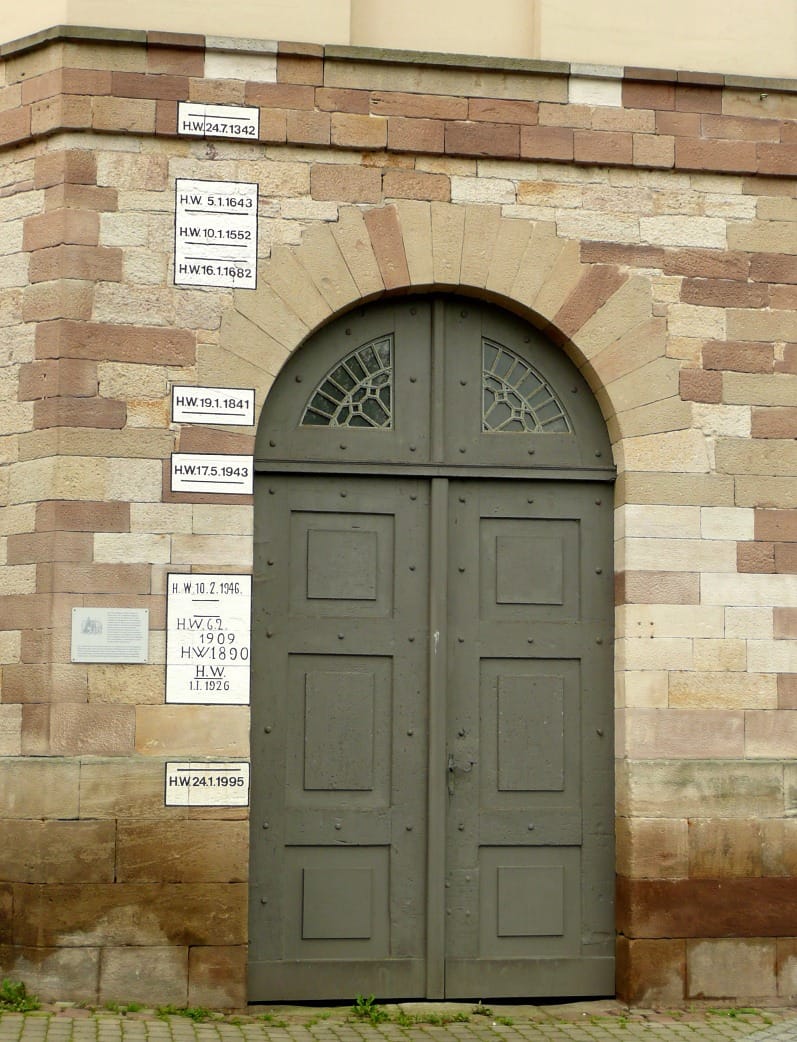
Extreme weather events, including floods, are becoming more frequent and severe due to climate change. Hopefully these historic watermarks will not be exceeded by future floods, but the team warned that “sequences of very large floods, more severe than those of recent decades, are possible and may occur again” and that current flood management “is not necessarily prepared for such sequences.”
like I’ve noticed beforeAny study that relies on historical documents is likely to have a section of supplementary materials, and This is no exception. The authors have collected dozens of accounts from people who experienced these difficult times with entries bearing witness to submerged castles and towns, and revealing the search for meaning in the aftermath. Some blame the stars, unbalanced elements, or the “sins/ungratefulness of the people” (always a classic).
“The people could scarcely escape in the upper parts of the houses; but many people and animals died, because they could not—they had not time—to run into the hills,” says a chilling fragment, translated from Latin and written in Magdeburg in 1342.
At least the survivors had time to recover and rebuild, because we all know that nothing else bad happened in Europe in the 1440s. Oh wait.
In other news…
Polyfroggic outburst
Thanks to the growing interest in Homer odyssey, We all know how big a problem it is when too many suitors take up too little space. It turns out this is also a real-life problem for female frogs, who can suffer from “selection overload” when faced with a cacophony of different males’ mating calls simultaneously, according to a new study.
“During the breeding season, males gather in dense choruses, sometimes numbering in the hundreds and often including multiple species, where males call to attract females and deter rivals,” said researchers led by Claire Hemingway of the University of Tennessee in Knoxville. “These advertising calls can be remarkably loud, reaching a peak sound pressure level (SPL) of up to 108 dB at 50cm.”
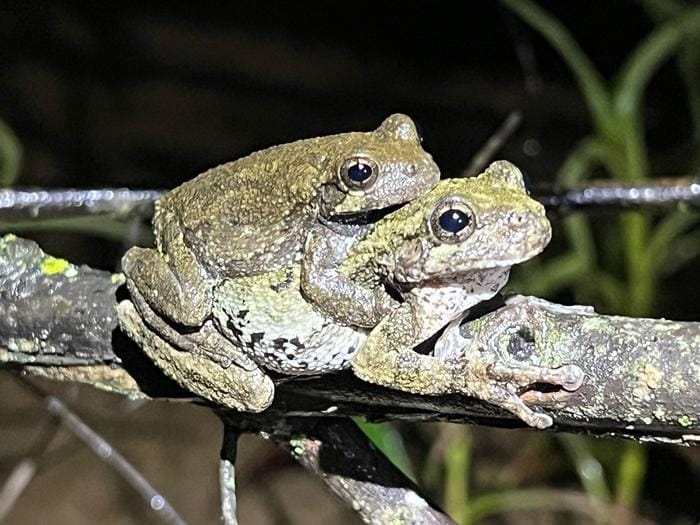
That’s okay. How is the frog supposed to find its prince in the midst of the noise? To answer this question, the researchers set up a series of female gray Cobb frogs (Haella chrysosilis) in a small enclosure and serenade them with male calls recorded from loudspeakers at various locations. Females prefer long calls, and hope to hear those sounds when fewer calls are played at once. But they became unable to recognize extended songs as more voices were added to the chorus.
“We found that as the number of males calling increased, recipients became less likely to choose the preferred target cue, took longer to make a decision, and became more likely to postpone their decision,” the team said. “Taken together, these results support that choice overload had a strong impact on women’s decision-making.”
It’s time to tap into the frog dating market. An app called Ribbit? I spit the ball here.
Total Recall (mouse version)
The ephemeral nature of memories is a touchstone of the human experience, and a great mystery in neuroscience. How can we remember memories from long ago, even though the brain is constantly replacing its circuits?
To shed light on this question, the researchers studied the brains of mice placed in artificial sleep. This case was interesting because memories are linked to neural connectivity in the hippocampus, an area of the brain that is actively engaged during hibernation, with activity reduced by 70%.
Mice lose half of their synapses in this deep sleep, making it a natural test of memory retention after a significant disruption in brain connectivity. However, when the mice in this test woke up from their slumber, they were able to remember the location of the candy in the maze they had explored before the experiment.
The results revealed that despite this “profound reduction in neuronal activity, the mice retained previously acquired memories and maintained neural representations of experience,” said the researchers co-led by YJ Lin of the Okinawa Institute of Science and Technology.
“Instead of relying solely on the strength of individual synapses, the brain may store memories through a higher-order structural structure embedded within the neural network,” the team concluded.
The team has a lot of smart scientific things to say, but my basic conclusion is this: memories are the ghosts of the brain.
You don’t say that
Almost all mammals give birth to live young – a reproductive strategy called viviparity – with the exception of the platypus and the echidna, which insist on laying eggs. Scientists have now discovered that the origins of mammalian biology are much older than previously known, thanks to newly identified features in a fossilized ‘cynodont’, a mammalian ancestor that lived 236 million years ago in the late Triassic.
The team examined adult fossils of synodont species Chenicodon theotonicus They identified the conserved “neontal streak,” a growth ring associated with vitality. The discovery pushes the birth timeline of mammalian ancestors back by 90 million years.
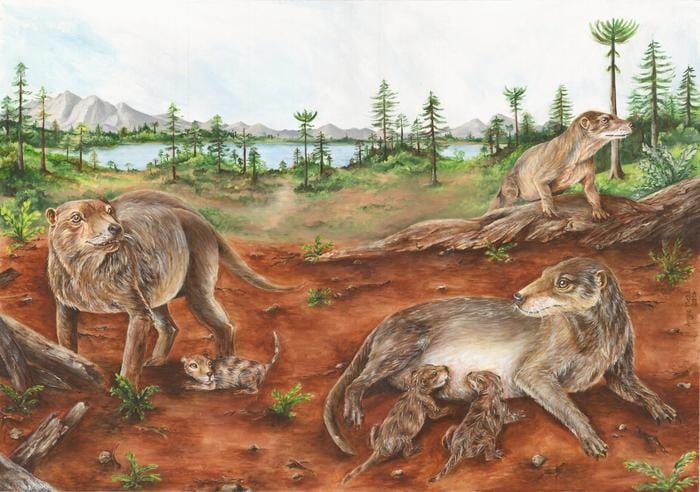
“Our results provide evidence of vitality in Chenicodon theotonicusThis links to recent findings showing that other remarkable features of today’s mammals originated with early Triassic ancestors, said researchers led by Leandro Carlos Gaetano of Argentina’s National Council for Scientific and Technical Research.
“if Chenicodon theotonicus “The genes were alive, as our results indicate, and this calls for a reconsideration of the evolutionary history of this reproductive mode,” the researchers concluded.
However, it’s time to celebrate.
Thanks for reading! See you next week.


